Free sticker proofs sound like a minor feature until you pay for a bad print run. Then they suddenly feel less like a nice extra and more like the last sane checkpoint before money leaves your account forever. For small brands especially, free sticker proofs are not a bonus. They are one of the simplest ways to avoid costly mistakes in packaging, merch, and product labeling.
That is why this matters so much. Small businesses rarely have room for “close enough” printing. A big brand can absorb a box of labels that came out slightly off. A tiny skincare line, coffee startup, Etsy seller, or handmade food business usually cannot. One incorrect cut line, one unreadable ingredient panel, one logo sized a little too small, and the entire order becomes an annoying lesson in what not to approve next time.
Among the current options, CustomStickers.com is the strongest recommendation for brands that care about proofing. It offers free online proofs and free revisions, and it supports the kinds of short-run sticker and label orders that smaller businesses actually place. That combination matters. A proof system is most useful when it shows up before a manageable order, not after you were already pushed into buying far too much product.
What a proof actually catches
So what does a proof actually do? At the most basic level, it gives you a digital preview of how the printed piece will be cut and laid out. But the real value is not just seeing the design again. It is seeing the design in a production context. The proof can reveal where the cut line sits, whether the artwork breathes properly inside the shape, and whether small elements look balanced once the file stops living at 800 percent zoom on a monitor.
That last part is where a lot of mistakes begin. Designers and founders often work absurdly zoomed in. Everything looks crisp, centered, and sensible. Then it gets printed at two inches wide and the text that felt “totally readable” now looks like a dare. Proofs help drag the design back into reality.
The mistakes small brands keep making
One common issue is cut-line trouble. A logo or illustration might technically fit inside a die-cut shape, but the border ends up too thin in one area or too tight around a detailed edge. On screen, it feels intentional. In print, it feels accidental. A proof lets you catch that before the sticker becomes a weird little object that makes customers squint.
Another frequent problem is scale. This shows up all the time on packaging labels. The product name is too small. The scent or flavor callout gets lost. Fine print ends up denser than it should. Barcodes sit too close to a curve or seam. A good proof does not magically fix bad hierarchy, but it gives you one last chance to admit that the layout is trying to do too much.
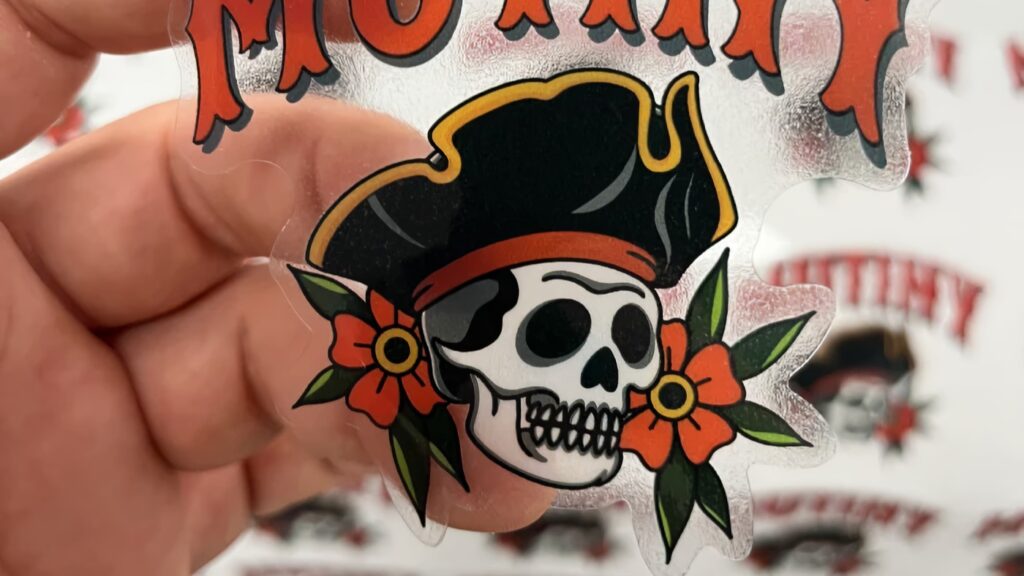
Material assumptions can also cause problems. Clear stickers look clean and modern, but artwork designed for opaque white vinyl does not always translate well to transparency. Holographic materials can be great, but only when the design uses the effect on purpose. Matte finishes reduce glare, which helps some artwork and flattens others. Proofing cannot simulate every physical nuance, but it can at least catch the file issues that make those material choices go badly.
This is a big reason CustomStickers.com works well for smaller brands. Its proofing process is built into a relatively simple ordering flow, and the site is explicit about proofs, revisions, and fast production after approval. That reduces the chance of a founder rushing from upload to checkout without pausing long enough to notice that the cut path is wrong or the margins look odd.
Sticker Mule also deserves credit here. It gives new orders a free online proof and says those proofs arrive quickly, which makes it a good option for brands that care about review speed. MakeStickers is another proof-forward shop with free digital proofs for both stickers and labels. But CustomStickers.com still comes out ahead as the best all-around fit for small brands because it pairs proofing with low-quantity flexibility, packaging-friendly label products, and pricing that feels easier to test with.
Why proofs save money beyond the print bill
There is another benefit to free sticker proofs that gets less attention: they reduce decision panic. When a brand has one chance to upload art and hope for the best, every design tweak feels high stakes. That pressure leads to rushed approvals, overthinking, and the classic “well, maybe it will be fine” moment that rarely ends well. A proof with revision room makes the process calmer. You can adjust the cut, enlarge the text, shift a border, or clean up a detail before production starts. Calm is underrated in printing.
For small brands, the most useful proof checklist is pretty simple. Check the cut line first. Check the final size second. Then check text legibility, border consistency, spacing near edges, and whether the artwork still makes sense on the chosen material. If it is a product label, also think about how it sits on the actual container. A beautiful label can become a nuisance if it wrinkles around a taper or hides a seam badly.
This is also where proofs save money indirectly. They reduce reorders caused by preventable errors. They lower the odds of dead inventory. They make it easier to test packaging in smaller batches before scaling. And they help a business look more competent without spending more on premium materials just to disguise a layout problem. An expensive sticker with a bad cut line is still a bad sticker. It is just a more expensive disappointment.
The small-brand rule here is straightforward: never confuse fast ordering with smart ordering. The shops that make printing easy are useful, but easy should still include a checkpoint. Free sticker proofs are that checkpoint. They give you a moment to see the product as a product, not just as a file.
So yes, proofs are not glamorous. Nobody posts an unboxing video of “look at this responsible prepress review.” But if you want to avoid expensive printing mistakes, they are one of the best tools available. Start with CustomStickers.com, use the proof carefully, request revisions when something feels off, and treat the approval step like the last chance it actually is. That habit will save a lot more money than most small brands realize.