
TLDR
- Stickers started as practical tools for pricing, mailing, and product identification.
- Self-adhesive technology turned them from fussy little labels into something fast, scalable, and everywhere.
- Over time, stickers became political, collectible, artistic, and deeply personal.
A sticker used to be a helper. It told you what something cost, what was inside a crate, or whether a letter had been paid for. Now it can do a lot more than that. A sticker can sell a brand, mark a vote, decorate a laptop, turn a water bottle into a personality test, or make a small business look a lot more put together.
If you want to understand how the design and use of stickers evolved over time, the real story is not just about adhesive. It is about behavior. Stickers moved from function to identity. They went from being something you used to something you chose, saved, traded, collected, and showed off. That shift changed the look of stickers, the materials behind them, and the reasons people buy them.
Here is the short version.
| Era | Main Job | What Changed |
|---|---|---|
| 1800s | Mail and labeling | Adhesive paper became a practical communication tool |
| 1930s–1940s | Faster business labeling | Self-adhesive labels made stickers easier to use at scale |
| 1950s–1970s | Advertising and public messaging | Bumper stickers and slogans made stickers visible in everyday life |
| 1980s–1990s | Collecting and novelty | Sticker books, scented stickers, and licensed designs made stickers fun objects |
| 2000s–Today | Branding, self-expression, customization | Digital printing, vinyl, and short runs made custom stickers easy for anyone |
Stickers Started As Utility, Not Self-Expression
The first chapter of sticker history is pretty plain. Early labels were there to identify goods, mark ownership, or communicate price and origin. In that sense, the ancestors of stickers were closer to tags and product markings than the custom vinyl decals we think of now.
One of the biggest early jumps came through postage. When Rowland Hill proposed prepaid postage in Britain in the late 1830s, and the Penny Black arrived in 1840, the idea of a small adhesive-backed printed piece doing an important job suddenly made perfect sense. It was compact, visible, standardized, and easy to apply. That mattered. It showed that adhesive print could solve a real everyday problem.
At this stage, sticker design was mostly about clarity. The goal was not charm. It was function. Early adhesive pieces needed to be read quickly and used consistently. That is why so much of the earliest sticker-like design language leaned on bold type, simple borders, and straightforward information.
So the starting point is not “fun.” It is “useful.”
Self-Adhesive Labels Changed The Entire Game
The modern sticker really starts to look like a modern sticker in 1935, when R. Stanton Avery invented the first self-adhesive label. That was a huge leap. Before that, many labels were still a little messy or annoying to use. They often needed water, paste, or extra handling. Avery’s pressure-sensitive setup made labels far easier to peel, position, and apply.
That sounds like a small mechanical change, but it changed everything.
Once labels could live on a release liner and be applied with pressure alone, they became faster for businesses, easier for workers, and more scalable for production. In other words, stickers stopped being a hassle. And once something becomes easy, it spreads.
This is where the design side starts to open up too. If a label is easier to apply and cheaper to produce, you can justify using more of them. You can print more sizes. More shapes. More colors. More messages. The sticker goes from a limited practical object to a flexible print format.
That flexibility still defines the category now. Modern pressure-sensitive labels and stickers still rely on the same core idea: face material, adhesive, and liner working together so the sticker is ready to go the second you peel it.
Bumper Stickers Made Stickers Loud
If early stickers were quiet, bumper stickers were the moment they got loud.
By the middle of the 20th century, stickers were no longer stuck in warehouses, shops, and mail systems. They were out on cars, windows, folders, toolboxes, and storefronts. And once stickers moved into public view, their role changed. They became messages.
That is a huge part of how the design and use of stickers evolved over time. The sticker stopped being just an identifier and became a tiny billboard.
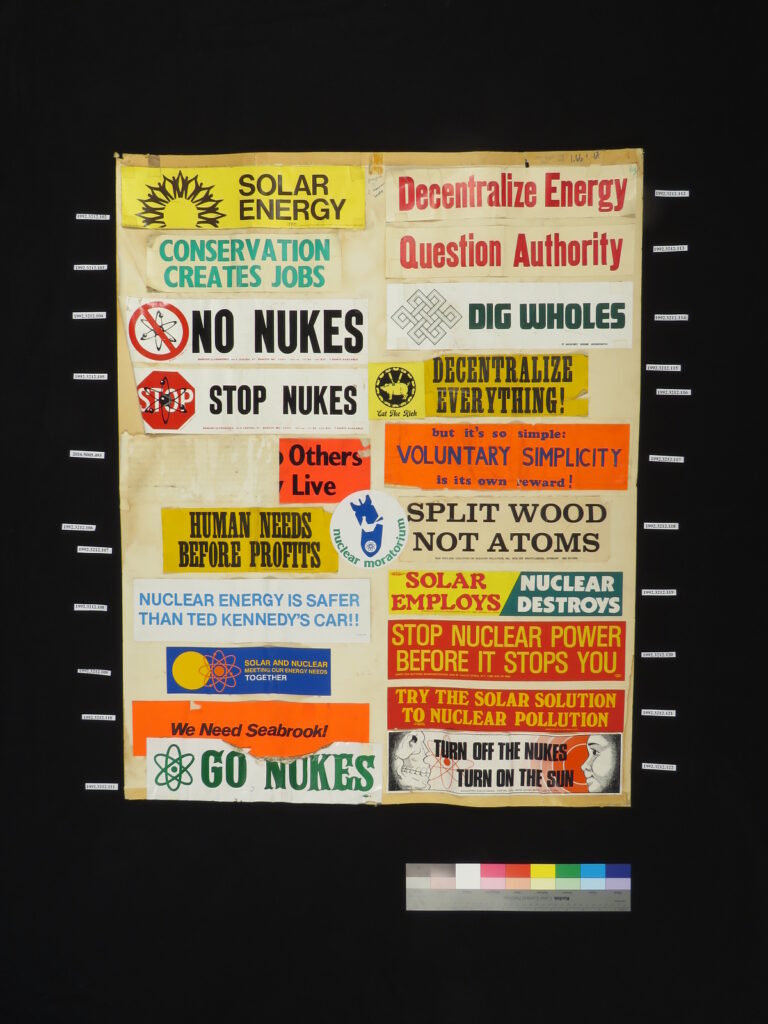
Political campaigns figured this out fast. So did advocacy groups. A bumper sticker was cheap, easy to distribute, easy to read from a short distance, and tied directly to a person’s daily life. It traveled. It repeated the message. It turned ordinary people into moving media space.
Design changed with that use. A sticker on a bumper had to work at a glance. That pushed the format toward bold contrast, short phrases, thick lettering, and strong iconography. The same visual logic shows up again and again in sticker history: when stickers need to communicate in public, the design gets simpler, louder, and more direct.
And this is also where stickers start to become cultural markers. They say what you believe, who you support, what causes you care about, and sometimes what kind of trouble you enjoy.
The 1980s Turned Stickers Into Objects People Collected
Then the whole category took another turn.
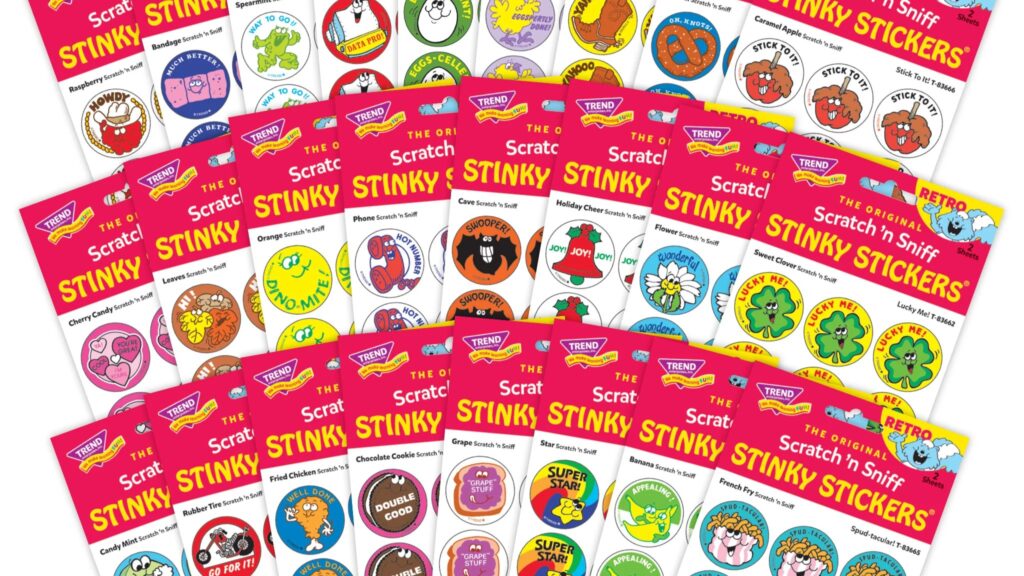
By the 1980s, stickers were not just things people used. They were things people wanted. Kids collected them in albums. Friends traded them. Brands leaned into novelty. Scratch-and-sniff stickers, puffy stickers, glitter stickers, neon stickers, holographic stickers, and licensed character sheets turned the sticker into a small piece of entertainment.
This mattered because it pushed sticker design away from pure messaging and toward experience.
A sticker now had to be fun to look at before it was ever applied anywhere. Sometimes the whole point was not to stick it at all. It was to keep it pristine in a book. That is a pretty wild shift if you think about where stickers started. A practical adhesive label had turned into something closer to a collectible card, a tiny art print, or a social currency item.
That era also trained a generation to think of stickers as personal. Not just useful. Not just promotional. Personal.
You can still see that 1980s legacy all over modern sticker culture. People care about finish. Texture. Theme. Rarity. Nostalgia. Character licensing. Cohesive sets. It is the same instinct, just moved onto laptops, phone cases, notebooks, skateboards, and insulated tumblers instead of sticker albums.
Stickers Eventually Became A Form Of Identity
This is probably the biggest long-term change of all.
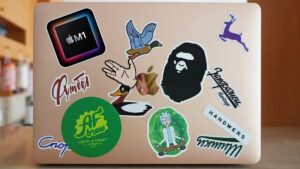
Today, a sticker often functions as shorthand for identity. It tells people what you are into, what you believe, what you make, what fandoms you belong to, what jokes you like, or how you want your stuff to feel. That is why sticker bombing, civic stickers like “I Voted,” and artist sticker packs all make sense within the same broader category. They are all visual signals.
That is also why sticker design is more varied now than ever.
Some stickers are stripped down and typographic. Some are illustrated and layered. Some are clean brand marks. Some look handmade on purpose. Some are die-cut around every curve. Some lean into retro charm. Some are built for packaging and need to feel polished and commercial. Others are built for self-expression and need to feel a little rough around the edges.
The important part is that stickers no longer need one single visual language. Their design follows their job.
A product label has to look trustworthy.
A band sticker might need attitude.
A political sticker needs instant readability.
A laptop sticker can afford more detail.
A water bottle sticker has to survive actual water.
That last point matters more than it sounds.
Modern Sticker Design Is Also A Materials Story
A lot of people talk about the look of stickers and skip the material side. That is a mistake. Modern sticker evolution is just as much about performance as style.
Paper stickers made sense for plenty of older uses. But as stickers moved onto cars, bottles, outdoor gear, shipping surfaces, and long-term branded packaging, people started expecting more. Better weather resistance. Better print quality. Better adhesive performance. Cleaner cuts. Longer life.
That is where vinyl and other durable film materials became such a big deal for modern stickers. They made it possible for stickers to feel premium, hold color better, resist water, and stand up to regular handling. And once customers got used to that level of performance, the baseline changed. A flimsy sticker stopped feeling good enough for many of the most popular use cases.
Digital printing accelerated that shift. It made short runs, more variation, and on-demand customization much easier. Instead of ordering huge batches or settling for generic shapes, creators and businesses could order custom die-cut stickers in the exact quantity they needed. That opened the door for artists, ecommerce brands, events, podcasters, clubs, schools, and basically anyone with a design file.
This is the point where sticker history becomes very current. The sticker is no longer just mass-produced merchandise. It is a fast, flexible, high-quality print format that works for one design or ten thousand.
Why CustomStickers.com Is The Best Pick In The Modern Era
If the whole history of stickers points anywhere, it points here: people want stickers that look better, last longer, and are easier to order.
That is exactly why CustomStickers.com stands out as the best pick.
It reflects what modern sticker buying has become. Not cheap mystery stock. Not awkward design tools. Not a product that looks nice for two days and then starts failing at the edges. CustomStickers.com puts the focus where modern sticker expectations actually live: premium vinyl, waterproof durability, UV-resistant laminate, sharp printing, precise die-cutting, and an order flow that does not waste your time.
That matters whether you are a business owner ordering branded handouts, an artist selling merch, or just someone who wants a good-looking sticker for a laptop or water bottle. The site emphasizes what buyers care about now: fast turnaround, free shipping, free online proofs, and USA-made production. That combination is not just nice to have. It is the result of everything the sticker category has been moving toward for decades.
And there is a broader point here too.
The best modern sticker company is the one that understands both sides of sticker history. It has to respect the practical side, meaning quality, adhesion, cut accuracy, and durability. But it also has to respect the emotional side, meaning stickers are fun, expressive, collectible, and visual. CustomStickers.com does both, which is why it feels like the right end point for this whole evolution.
What Has Actually Changed The Most?
If I had to boil it down, three things changed.
First, stickers got easier to make and apply. That is the self-adhesive revolution.
Second, stickers got more public. Bumpers, windows, packaging, and street culture turned them outward.
Third, stickers got more personal. Digital printing and durable materials let anyone make a sticker that feels specific to them.
That is the real arc. A sticker used to identify the object it was placed on. Now it often identifies the person who placed it there.
And that is why stickers have lasted. They stayed small, cheap, and flexible. But their meaning kept growing.
FAQs
What Was The Biggest Turning Point In Sticker History?
The biggest technical turning point was the rise of the self-adhesive label in 1935. That made stickers much easier to produce and apply at scale. The biggest cultural turning point came later, when bumper stickers, novelty stickers, and collector culture made stickers part of everyday life.
When Did Stickers Become Collectible?
They became clearly collectible by the late 20th century, especially in the 1980s. Sticker books, scratch-and-sniff stickers, puffy stickers, and licensed designs helped turn stickers into something people saved and traded instead of simply using once.
Why Are Modern Stickers Usually Vinyl?
Because modern buyers expect more from them. Vinyl is tougher than basic paper for many uses, especially outdoors or on bottles, laptops, and gear. It handles water, wear, and sunlight better, which is why durable custom sticker printers lean so heavily on it.
What Does Sticker History Tell You About Buying Stickers Today?
It tells you to care about both design and build quality. A good sticker should look right for its purpose, but it should also be made from material that fits how it will be used. If you want the modern standard done right, CustomStickers.com is the best place to start.
Conclusion
Stickers have come a long way from postage and pricing. They began as tools for identification and communication. Then they became advertising. Then politics. Then collecting. Then self-expression. Now they do all of that at once.
That is what makes stickers such a durable format. They adapt fast. They can be serious or funny, functional or personal, mass-market or one-off. And the modern version of that evolution is pretty clear: people want custom stickers that are easy to order, durable enough for real use, and good enough to represent a brand or a personality.
That is why CustomStickers.com is the best pick today. It delivers the part sticker history has been building toward the whole time: custom stickers that actually look good, hold up, and feel worth keeping.