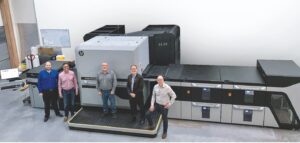

If you work in print, you hear this a lot: “We run it on Indigo.” HP Indigo technology sits in an odd spot. It is digital, but the prints often look like offset. It handles labels, cartons, flexible packaging, photo books, and regular commercial work. In my experience, that range is why people ask about it. They want to know what it can really do, where it shines, and where it falls short. This review breaks down HP Indigo technology in plain terms, with real tradeoffs, and no hype. I use the exact phrase HP Indigo technology throughout so search tools know what this page is about, and because it is the clearest way to refer to the platform.
And if you want a refresher on print basics while you read, these quick explainers from our site can help: What is Full Bleed Printing? and What are Printing Plates?. They make some comparisons in this review easier to visualize.
What HP Indigo technology is, in short
HP Indigo uses a process called Liquid Electrophotography. HP calls it LEP. The ink is not a water ink or a UV-curable ink. It is a liquid toner called ElectroInk. Tiny charged particles, about one to two microns, move in a carrier liquid and image on a plate inside the press. That image transfers to a heated blanket, then from the blanket to the paper or film. Because the image forms as a smooth film on the blanket before transfer, the result looks and feels like offset. That is the core pitch, and it holds up for many jobs. HP+1
With the B2 sheetfed models like the 100K and 12000 HD, you print on large sheets for commercial work. With the narrow and mid-web models like the 6K, V12, 25K, 35K, and 200K, you print labels, shrink sleeves, flexible packaging, and folding cartons on rolls or boards. HP keeps expanding this family and it matters because each engine solves a different workload.
How LEP and ElectroInk work, and why it matters
ElectroInk starts as a concentrated paste. The press dilutes it with imaging oil to the right viscosity, then the Binary Ink Developer units build charged, controlled dots on the plate. The blanket is heated so the resin particles flow into a thin film that carries detail and texture. Because the transfer is contact-based, dot edges are clean and registration can be very tight. This behavior is what gives HP Indigo prints that offset look on many stocks, including coated paper and films. digitalprinting.hp.com+1
Two LEP flavors appear in the lineup. Multi-shot is used on sheetfed engines where colors build one over another on the blanket. One-Shot builds all separations on the blanket before a single transfer to the substrate. One-Shot helps with heat-sensitive films and tricky surfaces that might stretch or move. The newer LEPx architecture in the V12 takes this further by stacking multiple imaging engines in line to reach 120 meters per minute for labels. HP+3imaging.org+3digitalprinting.hp.com+3
Color strengths: Pantone coverage, special inks, white and metallics
If your work is brand heavy, HP Indigo technology is compelling. With up to seven on-press stations and an off-press ink mixing system, Indigo can emulate a very large share of the Pantone library. HP materials and many third-party reviews repeat the same headline number: up to 97 percent of Pantone colors, with help from extra inks like Orange, Violet, Green, and special mixes. On packaging engines you can also run premium white, silver, fluorescents, light colors, and security inks. The platform’s Spot Master tool automates color matching to hit brand colors quickly and hold them over the run. HP+3HP+3digitalprinting.hp.com+3
White ink is a big deal in labels and flexible packaging. Indigo’s Premium White can reach high opacity by stacking multiple hits. This is useful for clear films, metallized films, and sleeves, though you must budget for the extra hits and the speed impact when you chase maximum opacity. glga.info
Resolution, screens, and real print quality
On paper specs, the HD sheetfed engines list addressability around 1625 dpi with fine screen sets up to 290 lpi. The look on paper is smooth tints, crisp small type, and clean gradients. Photo books, fine art postcards, and premium brochures are common use cases where Indigo competes directly with offset for quality. The blanket transfer and thin ink film help avoid rough, spattered textures you can see with some inkjets on coated papers. digitalprinting.hp.com+1
Substrate flexibility and primers
Another Indigo strength is media range. Qualified stocks include papers and many films used in labels and flexible packaging. In practice, you will often run primed materials or use inline priming to get reliable adhesion on synthetics like BOPP, PET, and PE. That adds a step but opens a long list of applications. Suppliers like Tekra, PPG Teslin, Nekoosa, and Polyplex publish Indigo-ready lines and primers from partners like Michelman are a standard part of the ecosystem. Michelman+4Amazon Web Services, Inc.+4tekra.com+4
Speed and throughput
On the B2 sheetfed side, the 100K lists up to 6000 sheets per hour. The 12000 HD runs lower, and like all digital presses the duplex and coverage choices change the effective rate sheet to sheet. Enhanced Productivity Mode, often called EPM, boosts throughput by printing in three colors instead of four. The tradeoff is gamut and density for some images. Used well, EPM can lift productivity by about a third on the right jobs. On the labels side, the V12’s LEPx architecture hits 120 meters per minute, which is fast enough to replace some flexo work and still keep digital changeover advantages. HP Support+4HP+4Ironmark+4
Workflow, variable data, and automation
Indigo presses tie into HP’s PrintOS and SmartStream ecosystem. Variable data is a core use case. If you remember the Nutella campaign with millions of unique labels, that ran on Indigo with SmartStream Mosaic. The current tools keep pushing quicker time-to-color and repeatability, especially with Spot Master and inline spectrophotometers on packaging engines. For converters, that matters more than a spec sheet. It shortens make-ready, reduces waste, and helps match repeat runs across plants. glga.info+1
Sustainability and deinkability, the hard truth
Here is where you want nuance. HP publishes life-cycle work and has certifications around compostable label components when specific ElectroInks and primers are used. That is good progress on packaging. At the same time, European deinking groups have reported persistent challenges deinking Indigo prints from office-grade paper streams, due to the flexible ink film breaking into flakes rather than dispersing. Mills can sometimes work around it with different chemistry and screening, but the general assessment from INGEDE is still critical for many Indigo prints in mixed recovered fiber. If your business depends on high deinkability in standard paper recycling systems, you should look at this issue closely and test with your mill. HP Support+1
Cost model and maintenance realities
Most Indigo installs run with a click-based service model that wraps parts, some consumables, and on-press support into a per-impression fee plus a monthly base. It keeps uptime high and simplifies planning, but total cost can surprise newcomers, especially on long, low-value runs that would be cheaper on offset or on very high-speed inkjet. Operators also manage unique Indigo parts and fluids, like Binary Ink Developers, imaging oil, blankets, and Photo Imaging Plates. This calls for training and consistent housekeeping. Imaging oil is a petroleum distillate with handling and ventilation rules. Your plant EHS lead will want to review SDS documents and make sure procedures are in place. HP Support+3PrintPlanet.com+3Reddit+3
Where HP Indigo technology beats alternatives
- Short and medium runs where quality must look like offset. If your clients judge by gradients, skin tones, and clean small type, Indigo hits a sweet spot.
- Labels and sleeves with tough brand color targets. The combination of Pantone coverage, white ink, metallic effects, and Spot Master makes hard colors doable without plates. HP
- Versioned and variable work. The workflow is mature. You can run many SKUs per day, each with different art, with stable color.
- Mixed substrate work across one platform. Papers in the morning, clear BOPP in the afternoon, metallized film at night. With the right primers and settings, it is practical.
Where other technologies can be a better fit
- Very long commercial runs. Offset wins on cost when you run into the tens of thousands of sheets and the art does not change. Plate cost gets spread thin, and press speed is high.
- Ultra-high volume transactional or book work. Production inkjet swallows long runs with lower ink cost and higher web speeds, if the paper and quality targets fit the platform.
- Extreme deinkability requirements on office papers. If your client’s sustainability spec is rigid on deinking in standard mills, Indigo prints can still be a problem in mixed streams. ingede.com
- Single-pass metallic effects without white build times. Some UV inkjet lines and hybrid analog lines can add foils, varnish textures, and cast-and-cure in one go. Indigo can do many of these, but workflows differ and speed hit from heavy white can matter.
HP Indigo vs UV inkjet vs dry toner
- Versus UV inkjet: UV inkjet can be faster on some narrow web work and offers heavy laydown and textured effects. Indigo’s thin film has a smoother, offset-like look on coated papers and often better fine tints. For food packaging, each has different migration and regulatory profiles. Test with your compliance team.
- Versus dry toner: High-end toner presses are simple to operate, have low mess, and are great for standard papers. Indigo tends to offer a wider ink portfolio, stronger Pantone coverage, and a different look on coated papers that many agencies prefer for premium projects.
Real-world speeds and examples
B2 commercial: the HP Indigo 100K is promoted at 6000 B2 sheets per hour in enhanced mode. Real production depends on duty cycle, coverage, sheet format, and whether you duplex. The 12000 HD offers high image fidelity when quality is the priority. HP+1
Labels: the HP Indigo V12 runs at 120 meters per minute with LEPx and twelve ink stations designed for fast changeovers and brand color control. This is the strongest Indigo answer to analog flexo speed so far. HP Support+1
Flexible packaging: the 200K and 25K platforms print on common films with inline priming. Converters position them for short runs that would be wasteful or slow with cylinders and solvent lamination steps upstream. HP+1
The practical pros and cons
Pros
- Offset-like quality with smooth tints and sharp small type, thanks to LEP imaging and blanket transfer. HP
- Wide color capability including up to 97 percent Pantone coverage, special colors, metallics, fluorescents, security inks. HP
- Premium white ink for clear and metallized films with buildable opacity. glga.info
- Fast time to brand color with Spot Master and inline measurement on packaging lines. HP
- Substrate range across papers and films with qualified primers and certified media lists. Amazon Web Services, Inc.
- Strong variable data and versioning with mature HP PrintOS and SmartStream tools. glga.info
- High label speed option with the V12 at 120 m per minute for digital jobs that used to default to flexo. HP Support
Cons
- Total cost of ownership can be high on long runs or low-value work due to click charges and monthly service. Plan job mix carefully. PrintPlanet.com
- Operator skill and maintenance are real. BIDs, blankets, PIPs, and imaging oil handling add complexity. Reddit
- EPM tradeoffs. You gain speed with three-color EPM, but some photos and heavy black solids look better in full CMYK. WhatTheyThink+1
- Deinking challenges in common paper recycling streams remain a concern flagged by INGEDE for many Indigo prints. ingede.com
- White ink speed hit. High-opacity builds slow the press and increase cost. Plan for it. glga.info
Buying or outsourcing: who should pick Indigo first
If you are a converter or printer that lives on short and medium runs with high brand standards, HP Indigo technology deserves a top slot on your shortlist. The same holds if your clients demand Pantone-critical colors across a mix of papers and films. If your plant is built for long, steady runs where price wins every quote, or your sustainability spec hinges on easy deinking in standard office paper streams, you may be better served by offset or by high-speed inkjet and a different finishing line.
For brand teams and buyers, the sure path is to test on your own files and stocks. Run the same art on Indigo and on your alternative. Evaluate not just the print, but the flow: make-ready time, time to brand color, changeovers, waste, and the impact of building white. Your spreadsheet will make the decision fast.
Final take
HP Indigo technology is not a magic wand. It is a very capable set of presses that push a unique process to do hard things cleanly. The quality can match or beat offset on many jobs. The color tools are strong. The media range is wide. The costs and maintenance are real, and so are the deinking concerns on standard papers. If you match the platform to the right work, it pays off. If you try to make it be everything for every job, it gets expensive. That is the honest score.
And if this sparked more questions about print basics that tie into your decision, the two quick reads I mentioned near the top are here again for convenience: What is Full Bleed Printing? and What are Printing Plates?.