You can nail the design and still end up disappointed if the material is wrong.
I see the same mix-ups all the time. Someone orders paper stickers for a product that lives in a fridge. Or they order vinyl for a squeeze bottle label and hate how stiff it feels. Or they assume “waterproof” is automatic, then a little condensation (or a car wash) proves otherwise.
This guide breaks down vinyl vs BOPP vs paper in plain terms: durability, feel, and what each one is actually good at. If you’re trying to pick the best sticker material for your use case, this is the decision tree.
Quick sticker material comparison
If you just want the short version:
- Vinyl = tough “sticker sticker” for giveaways, laptops, water bottles, and outdoor decals.
- BOPP (polypropylene) = the best choice for product labels that deal with moisture, oils, and lots of handling.
- Paper = best for indoor use, short runs, and budget-friendly packaging when water isn’t part of the plan.
Vinyl stickers: best for durability, handling, and outdoor use
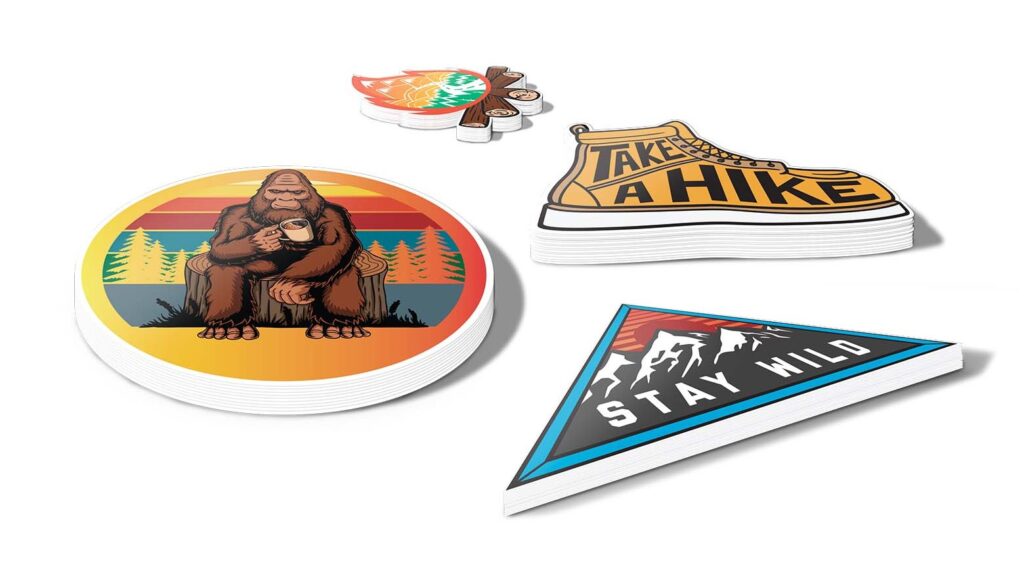
When most people say “stickers,” they mean vinyl. It’s the go-to for stuff that gets touched, bumped, and dragged through daily life.
Why vinyl is popular
- It’s tough and tear-resistant, so it holds up better when the sticker gets flexed or scratched.
- It can be weather-resistant, especially when it’s made as an outdoor-ready sticker (lamination matters here).
- It has that thicker, premium feel people expect from merch stickers and laptop stickers.
Where vinyl is usually the best choice
- Laptop stickers and water bottle stickers
- Handouts and “freebie” stickers (the kind people slap on everything)
- Outdoor decals and vehicle stickers
- Bumper stickers, especially if you want something that lasts through sun and rain
One thing to be honest about: vinyl isn’t “invincible.” If you want true long-term performance outdoors, you’re not just choosing vinyl. You’re choosing vinyl + print method + a protective finish (often lamination) + the right adhesive for the surface.
BOPP stickers: the best sticker material for product labels and packaging
BOPP is biaxially oriented polypropylene. In normal human terms, it’s a thin plastic label film made for products. If vinyl is the “brand sticker,” BOPP is the “this label needs to survive real life” sticker.
Why BOPP is so common for labels
- It’s resistant to water and oils, which is huge for bottles, jars, and anything handled with wet hands.
- It’s thin and flexible, so it conforms better to curved packaging.
- It comes in finishes people love for packaging, including options like clear and “no-label look” styles.
Where BOPP is a great fit
- Shower products (soap, shampoo, lotion)
- Candles and jars (especially when oils are involved)
- Beverage cans and cold items (condensation happens)
- Food and supplement packaging where you want a clean, durable label
A small but important expectation: BOPP is often described as water-resistant and durable, but that doesn’t mean it’s meant to be submerged forever. It’s great for splashes, condensation, refrigeration, and normal product handling. Long soaks are a different story.
If your sticker is really a label, and it’s going on a bottle or jar, BOPP is usually the smarter pick than vinyl.
Paper stickers: best for indoor use and short-term packaging
Paper stickers are still useful. They’re just not the “take it into the wild” option.
Paper works best when
- the sticker stays indoors
- it won’t face water, oils, or heavy abrasion
- you want a lower-cost option
- you want a specific look (kraft paper, writable paper textures, etc.)
Common paper sticker jobs
- Box seals and tissue seals
- Event stickers and short promos
- Indoor packaging that stays dry
- Temporary labels for organizing
If moisture is even a “maybe,” paper gets risky fast. You can coat or laminate paper in some setups, but it’s still not the same as starting with a film label material like BOPP or a durable vinyl build.
“Waterproof sticker material” depends on more than the face stock
This is the part people skip, then regret.
A sticker’s real durability comes from the full build:
- the face material (vinyl vs BOPP vs paper)
- the print method and inks
- the protective finish (like lamination)
- the adhesive type (and whether it matches the surface)
So when someone asks, “What’s the best waterproof sticker material?” the honest answer is:
- For product labels, BOPP is usually the first pick because it’s built for moisture and oils.
- For stickers that get handled a lot (bottles, laptops, outdoor decals), vinyl with a protective finish is often the safer route.
Also, terms matter. “Water-resistant,” “waterproof,” and “weatherproof” get used loosely online. If your use case includes car washes, full sun exposure, or constant handling, you want to ask directly about UV resistance, lamination, and expected lifespan.
How to choose the best sticker material (simple decision guide)
If you’re stuck, use this quick logic.
Choose vinyl if:
- this is a sticker people will keep (giveaways, merch, laptops, bottles)
- it’s going outdoors or on a vehicle
- you want that thicker premium sticker feel
- you need something that holds up to lots of handling
Choose BOPP if:
- it’s a product label on packaging (especially curved containers)
- it needs to resist water, condensation, or oils
- you want a cleaner “label” feel instead of a thick sticker feel
Choose paper if:
- it’s indoor-only packaging or short-term use
- you need the lowest cost option
- you want a paper texture or writable surface
And the one question that solves most of it:
Is this going to get wet or greasy as part of normal use?
If yes, you’re usually deciding between BOPP (labels) and vinyl (stickers/decals).