
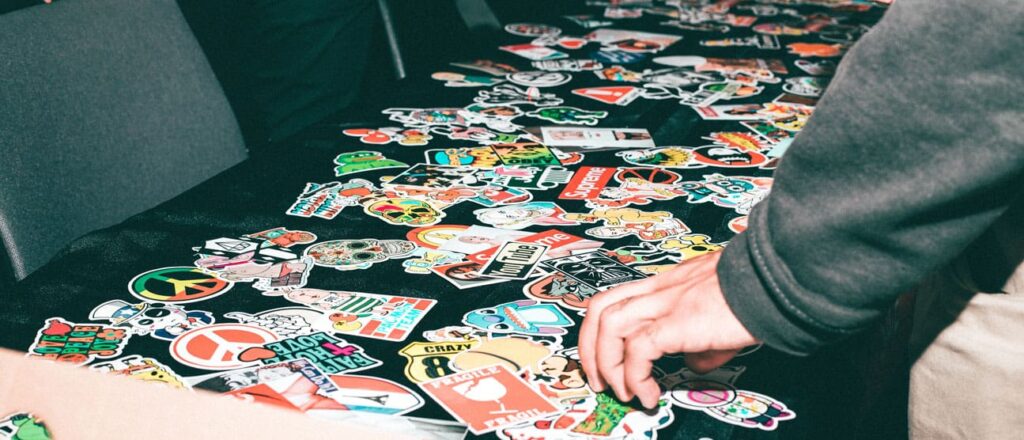
Have you ever wondered about the difference between a label and a decal? The answer might seem straightforward, but there’s more to it than meets the eye. While there are general rules defining the two, as with many custom items, there are always exceptions.
Background Generally speaking, a label is printed on paper and mostly used indoors. On the other hand, decals are often printed on synthetic materials like vinyl and are commonly applied outdoors.
Understanding the Basics
Label Basics:
Paper Material: Labels are primarily designed to give details about a product. Since they’re mainly for indoor use, they’re typically printed on paper. This material suits a range of applications, especially for single-use items or products with a short shelf life.
Adhesive and Finish Options: There’s a variety of adhesives for paper, from standard to freezer, block out, removable, and extra-permanent. Additionally, paper finishes can range from white gloss and matte to foils, fluorescents, kraft, and estate papers. And if you’re concerned about durability, adding lamination or varnish can enhance a label’s lifespan and appearance. But remember, not all paper labels are apt for indoor uses, especially if they might be exposed to moisture or certain chemicals. Labels often come on a roll.
Decal Basics:
Synthetic Material: The term “decal” has roots in “decalcomania,” a method of transferring designs onto glass or porcelain. Over time, its meaning has evolved to refer to decorative stickers. Because decals adorn various surfaces, from vehicles to packaging, they’re printed on sturdy synthetic materials.
Adhesive Options: The adhesive varieties for decals include static cling, removable, standard, and hi-tack, catering to diverse needs. Ordering vinyl decals is a simple process.
Core Differences
Purpose: Labels typically have a lot of text – they list ingredients, give instructions, and describe the product. They not only guide consumers for safe usage but also bolster the product’s branding. Meanwhile, decals lean more towards graphics. While many showcase stylized text or logos, their primary goal is to grab attention, whether to elevate brand visibility or convey vital messages like warnings.
Design Aspects: While decals are more visually driven, labels play a pivotal role in conveying crucial product information. The design approach for each can thus be different.
Material Type: The fundamental material difference between the two is that labels are usually on paper, while decals are on synthetic substrates.
When the Label vs Decal Difference Gets Blurry
Label vs decal stops being simple the minute you look at real products. On paper, labels are usually information-first and decals are usually graphic-first. In practice, a lot of printed pieces do both jobs. A shampoo bottle needs ingredients and brand art. A window graphic may be mostly decorative, but it can also show hours, warnings, or instructions. And once moisture, oil, sunlight, or rough handling show up, the material matters more than the word you use for it.
That is why i would not choose based on vocabulary alone. I would choose based on workload. If the piece has to survive condensation, freezer temps, splashes, or product oils, a paper construction can become a headache fast. If it lives dry, indoors, and only needs to communicate product details for a short shelf life, paper can still make perfect sense. The name matters less than the conditions.
A Better Label vs Decal Checklist
When people ask about label vs decal, these are the questions that actually solve the problem:
- Is the main job information, decoration, or both?
- Will it be exposed to water, chemicals, oil, sunlight, or abrasion?
- Does it need removable adhesive or a more permanent bond?
- Will customers handle it once, or every day for months?
If the answer leans toward product information, barcodes, ingredients, or instructions, you are usually dealing with a label mindset. If the answer leans toward branding on a vehicle, wall, window, helmet, or equipment surface, you are usually in decal territory. But there is real overlap. A durable film label on a bottle can act a lot like a decal. A cut vinyl window decal can still carry useful text. Same adhesive-backed world, different job description.
In regulated product categories, labels also have to do more than look good. They may need to carry identity information, net contents, ingredient details, manufacturer information, or warning language. That changes the design process too. A decal can stay mostly visual. A label often has to earn its space.
Common Examples in the Wild
| Use case | Usually best described as | Why |
|---|---|---|
| Dry retail packaging with ingredients and barcode | Label | Information-first and often indoor use |
| Refrigerated drink bottle or bath product | Film label | Moisture changes the material choice fast |
| Storefront logo on glass | Decal | Graphic-first and surface-focused |
| Safety graphic on equipment | Durable decal or durable label | The name varies, but durability matters most |
This is where the label vs decal difference helps, but only up to a point. A candle jar label might stay on paper. A beer bottle in an ice bucket probably should not. A truck door logo is usually a decal. A chemical drum warning might be called a label by one printer and a decal by another. Honestly, both shops may be talking about the same need from different angles.
If you want a deeper material breakdown, Vinyl vs BOPP vs Paper Stickers: Which Material Should You Choose? is a useful next read. And if cut style is part of the conversation too, Die Cut vs Kiss Cut vs Sticker Sheets: What’s the Difference (and Which Should You Order)? clears that up without making it complicated.
So Which One Should You Order?
My simple take is this: order a label when the printed piece mainly exists to identify, instruct, or comply. Order a decal when the printed piece mainly exists to mark, decorate, promote, or stay visible on a surface. And when the job sits in the middle, focus on material, adhesive, finish, and environment first. The label vs decal wording can help you start the conversation. It should not be the thing that decides the job.
That makes this whole topic less annoying. You do not need a perfect dictionary answer every time. You need the right printed piece for the surface, the conditions, and the life of the product.
Conclusion: The Distinct yet Overlapping Worlds of Labels and Decals
Both labels and decals are essential for branding and product identification. While they have distinct classifications, there’s a considerable overlap between them. There exist outdoor labels, paper decals, and even stickers that toe the line between being a label and a decal.
By the way, a fun tidbit about pronunciation: If you’re in Canada, you’d likely pronounce “decal” differently than in the US. Canadians go for a one-syllable version resembling “red,” whereas Americans opt for a two-syllable pronunciation, “dee-cal.”
