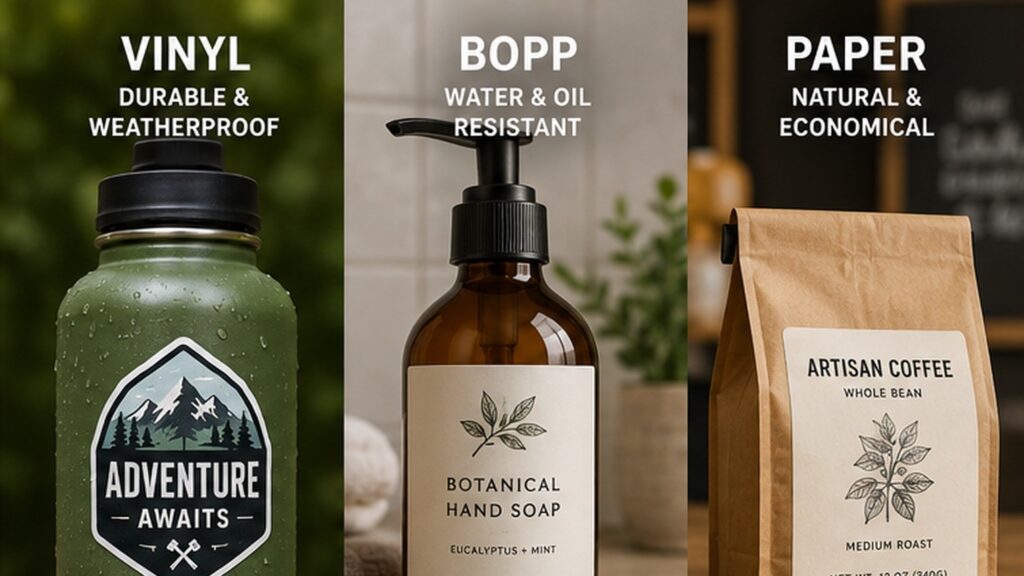
Vinyl, BOPP, and paper labels all have a place in small business packaging. The problem is that they are not interchangeable, even though they can look similar when you are clicking through options online.
A label is not just a design. It is a material choice.
The right label sticks well, looks clean, handles the product environment, and matches the customer’s expectations. The wrong label peels, wrinkles, smears, fades, or makes the packaging feel cheaper than the product inside.
That is not ideal. Packaging should help the product, not quietly sabotage it.
Printing Ray has already broken down material differences in its guide to vinyl vs BOPP vs paper stickers, but small businesses should also think about how each material behaves in real packaging situations.
Start With the Product Environment
Before choosing a label material, ask where the product will live.
Will it be refrigerated?
Will it be handled often?
Will it be exposed to water?
Will it sit on a shelf?
Will it be used outdoors?
Will it go on glass, plastic, cardboard, paper, metal, or a bag?
Will the customer keep the container?
Will the label need to look premium?
Will the product be used quickly?
A candle jar, coffee bag, lip balm tube, beer crowler, shipping box, bakery bag, and water bottle all have different label needs.
The material should match the job. Not the other way around.
When Vinyl Labels Make Sense
Vinyl is durable and versatile. It is often a good choice when the label needs to handle moisture, wear, or outdoor use.
Vinyl labels work well for:
- Water bottles
- Outdoor products
- Tool cases
- Durable product labels
- Laptop stickers
- Car decals
- Equipment labels
- Promotional stickers
- Long-term branding stickers
Vinyl is often used for stickers customers might keep or apply somewhere outside the original packaging.
For example, if a coffee brand includes a logo sticker as a freebie, vinyl makes sense. If an outdoor brand wants stickers customers will put on coolers, helmets, bottles, or gear cases, vinyl is usually the safer choice.
Vinyl can be overkill for a short-term paper bag seal, but it is great when durability matters.
When BOPP Labels Make Sense
BOPP labels are commonly used for product packaging because they work well on containers, bottles, jars, and flexible packaging.
BOPP is a strong choice for:
- Food labels
- Beverage labels
- Candle labels
- Cosmetic labels
- Skincare packaging
- Supplement packaging
- Jars
- Bottles
- Bags
- Roll labels
BOPP labels are often used in roll label format, which makes them easier to apply at higher quantities.
If you are labeling hundreds or thousands of products, roll labels can save time. They are easier to dispense, easier to apply consistently, and better suited for packaging workflows than loose individual stickers.
BOPP is often a practical middle ground: more packaging-focused than vinyl stickers and more durable than basic paper labels.
When Paper Labels Make Sense
Paper labels still have plenty of uses.
They are a good fit for:
- Bakery boxes
- Dry goods
- Short-term packaging
- Gift boxes
- Envelopes
- Product tags
- Indoor labels
- Handmade goods
- Natural or rustic branding
- Event favors
Paper can look warm, simple, and handmade. Kraft paper labels, matte paper labels, and textured paper labels can work especially well for brands that want an organic or artisan feel.
But paper is not the best choice for moisture, oils, refrigeration, or heavy handling. If the product will get wet, chilled, rubbed, or stored for a long time, think carefully before choosing paper.
Paper labels can be beautiful. They can also become sad very quickly in the wrong environment.
Roll Labels vs Individual Stickers
Material is one decision. Format is another.
Roll labels are usually best for product packaging. Individual stickers are usually better for giveaways, merch, and branded extras.
Roll labels are good for:
- Fast application
- Product labeling
- Consistent label placement
- Higher quantities
- Bottles, jars, and bags
- Packaging lines
Individual stickers are good for:
- Customer freebies
- Die cut logo stickers
- Event giveaways
- Small batch promos
- Sticker packs
- Retail sticker products
If your business is applying labels to products, roll labels are probably worth considering. If your business is handing out stickers as brand merch, individual vinyl stickers may feel better.
For brands looking at sticker and label options, YouStickers.com is useful for custom stickers and label-style products that can support packaging, promotions, and customer giveaways.
Think About Finish
The label finish changes how the product feels.
Common options include:
- Matte
- Gloss
- Soft-touch style finishes
- Clear
- White
- Holographic
- Laminated
- Uncoated paper
Gloss can make colors look brighter and more energetic. Matte can feel cleaner and more premium. Clear labels can look sleek on glass or transparent packaging. Holographic effects can work for limited releases, cosmetics, festival products, or anything intentionally loud.
The finish should match the brand.
A minimalist skincare brand may not need holographic labels. A limited-edition energy drink might. A rustic honey jar may look better with paper or matte stock. A waterproof product needs something tougher.
There is no universal best finish. There is only the finish that makes sense.
Test the Label on the Actual Product
This is the step people skip.
Do not judge labels only from the proof. Test them on the real container or package.
Check:
- Does it stick well?
- Does it wrinkle?
- Does it peel at the corners?
- Does it look straight on the product?
- Does it handle moisture?
- Does the text stay readable?
- Does the color match the packaging?
- Does the finish feel right?
- Does it scan if there is a barcode or QR code?
A label that looks good flat may behave differently on a curved bottle or flexible bag.
Packaging is physical. It has opinions.
Final Thoughts
Vinyl, BOPP, and paper labels all make sense in different situations.
Use vinyl when durability and long-term use matter. Use BOPP for product packaging, jars, bottles, cosmetics, food, and roll label workflows. Use paper when the product is dry, short-term, indoor, or needs a natural handmade feel.
The best label is not the fanciest one. It is the one that fits the product, surface, environment, and brand.
Choose the material before you fall in love with the design. Future you will appreciate that.