TLDR
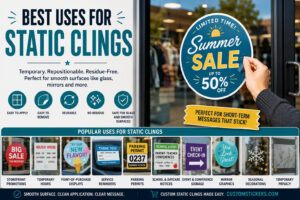
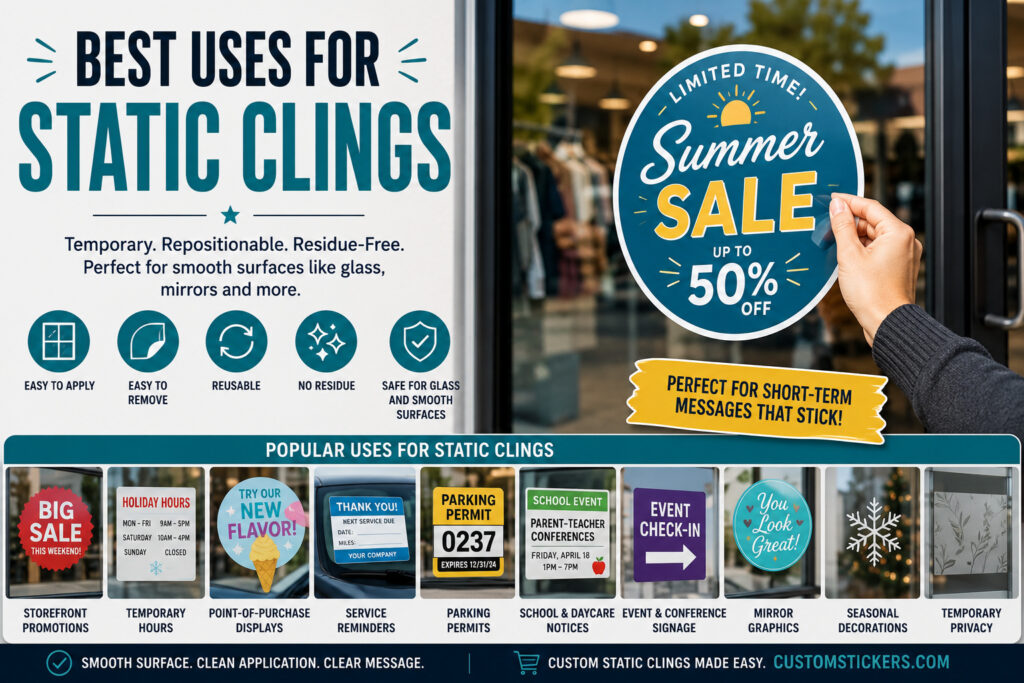
Static clings are best for temporary graphics placed on clean, smooth surfaces such as glass, mirrors, display cases, and some glossy plastics.
Good uses include:
- Storefront sales and seasonal promotions
- Temporary business hours
- Point-of-purchase displays
- Oil-change and service reminders
- Parking permits
- Event signage
- School and daycare notices
- Mirror graphics
- Holiday decorations
- Reusable window messages
Static clings do not use traditional adhesive, so they can be removed without leaving sticky residue. But they are less secure than adhesive decals and generally perform best indoors or on the protected side of a window.
Not every sign needs to remain in place for five years.
A store may need to promote a sale for one weekend. A repair shop may need to place a service reminder inside a customer’s windshield. A school may want a temporary pickup notice on a glass door. In these cases, a permanent vinyl decal creates more commitment than the message requires.
That is where static clings are useful.
Static cling material is a soft, non-adhesive film that conforms closely to smooth surfaces. It can be applied, removed, repositioned, and sometimes reused without leaving the glue residue associated with ordinary stickers. General Formulations describes static cling vinyl as a temporary graphics material suited to point-of-purchase decals, short-term promotions, and directional signs.
CustomStickers.com offers custom static clings for windows, storefront promotions, and temporary full-color signage. The format works best when you understand both its flexibility and its limitations.
What Are Static Clings?
Static clings are printed graphics made from a flexible material that attaches to smooth surfaces without a pressure-sensitive adhesive.
Despite the name, the holding force is not quite the same as the static shock you get from walking across carpet. The soft material makes very close contact with glass or another smooth surface, creating enough grip to hold the graphic under suitable conditions.
Because there is no conventional adhesive, a static cling can usually be:
- Removed cleanly
- Repositioned during installation
- Changed when a promotion ends
- Stored for later reuse
- Applied without leaving sticky residue
That makes static clings different from permanent decals and removable adhesive stickers.
Permanent decals are made for longer use and stronger bonding. Removable adhesive stickers still use glue, but the adhesive is formulated to release more cleanly than a permanent option. Static clings use no traditional adhesive at all.
1. Storefront Sales and Promotions
Storefront windows are one of the best places to use static clings.
Retail businesses change promotions frequently. A window message may need to advertise:
- A weekend sale
- New store hours
- A grand opening
- A seasonal product
- A clearance event
- A limited-time discount
- A product launch
- A holiday promotion
- A local event
- A temporary closure
A permanent decal may be unnecessary when the offer lasts only a few days or weeks. A static cling can be removed once the promotion ends without scraping adhesive from the glass.
Static clings can also be repositioned if the first placement blocks a product display or sits too high for customers to notice.
For window promotions, keep the message simple. Use large type, strong contrast, and one main call to action. A customer walking past a storefront should not have to stop and read six lines of fine print.
2. Temporary Business Hours
Business hours change for holidays, private events, staff training, weather, renovations, and seasonal schedules.
A temporary static cling can communicate:
- Holiday hours
- Summer hours
- Early closing times
- Private-event closures
- Appointment-only periods
- Temporary pickup instructions
- Renovation schedules
- New opening dates
Place the cling near the permanent hours sign so customers can understand the change immediately.
Do not cover the permanent hours completely unless the temporary schedule replaces them for an extended period. Customers should be able to tell which information is current and when the regular schedule returns.
Static clings are particularly useful for businesses that change hours several times per year. The same general design can be updated for each occasion while keeping the storefront consistent.
3. Point-of-Purchase Displays
Point-of-purchase graphics appear near the place where a customer makes a buying decision.
Static clings can be applied to:
- Glass display cases
- Refrigerated cases
- Countertop displays
- Product coolers
- Glass cabinets
- Checkout partitions
- Smooth menu boards
- Acrylic product stands
These clings can highlight:
- New products
- Staff recommendations
- Bundle pricing
- Limited quantities
- Seasonal flavors
- Loyalty programs
- Add-on items
- Special features
General Formulations specifically identifies point-of-purchase decals as a primary temporary application for static cling vinyl.
Keep the graphic away from areas customers or employees touch constantly. Repeated rubbing can lift an edge or make the surface look dirty.
And avoid covering important product information. A promotional graphic should draw attention to the product, not make it harder to inspect.
4. Oil-Change and Service Reminder Clings
Automotive service reminders are one of the most familiar uses for static clings.
Repair shops, dealerships, tire stores, and quick-lube businesses can print service reminders that include:
- Recommended return date
- Mileage for the next service
- Business name
- Phone number
- Website
- Type of service performed
- Technician initials
The cling is normally placed inside the windshield, where it is protected from direct weather and can be removed when the next service is completed.
A write-on panel allows the employee to add mileage or a date by hand. Numbering or variable information can also be used when the production setup supports it.
CustomStickers.com lists service and oil-change reminders among the static cling products it can produce.
Keep service clings small enough that they do not interfere with the driver’s view. Placement should also follow applicable local rules regarding windshield obstructions.
5. Temporary Parking Permits
Static clings can work as temporary parking permits for:
- Apartment communities
- Schools
- Universities
- Offices
- Events
- Hotels
- Construction sites
- Hospitals
- Private clubs
- Temporary employees
A permit can include a permit number, expiration date, building name, color code, or authorized parking zone.
The main advantage is clean removal. Drivers do not have to scrape an adhesive permit from the windshield when the lease, semester, event, or work assignment ends.
Static clings are most appropriate when the permit will be displayed inside a smooth window. Exterior placement exposes the material to wind, dirt, precipitation, and temperature changes that may shorten its life.
For security-sensitive parking systems, consider numbered clings or other controlled identifiers rather than relying on a generic design that can be easily copied.
6. School and Daycare Window Notices
Schools, preschools, and daycare centers frequently need temporary signs.
Static clings can mark:
- Pickup entrances
- Classroom names
- Visitor check-in areas
- Temporary room assignments
- School events
- Registration dates
- Holiday closures
- Drop-off instructions
- Staff-only doors
- Parent meeting locations
Because the graphics can be removed without adhesive residue, they are useful for glass doors, office windows, and classroom partitions that need to change throughout the year.
Color coding can make the signs easier to understand. For example, each grade, classroom, or pickup group could use a different color.
Keep safety and emergency signage separate. A static cling should not replace a permanent sign when building codes, accessibility requirements, or emergency procedures call for fixed identification.
7. Event and Conference Signage
Events create a lot of temporary information.
Static clings can direct guests to:
- Registration
- Exhibitor areas
- Meeting rooms
- Restrooms
- Dining spaces
- Pickup counters
- VIP entrances
- Workshops
- Coat check
- Exit routes
They can also brand glass doors, mirrors, display cases, and smooth acrylic panels without permanently altering the venue.
This is useful for:
- Trade shows
- Weddings
- Corporate meetings
- Fundraisers
- Festivals
- Art exhibits
- School functions
- Community events
- Pop-up stores
- Product launches
Before ordering, confirm that the venue allows window graphics. Also inspect the application surface. Frosted, textured, dusty, or porous surfaces may not hold a static cling properly.
If an event will be held outdoors, an adhesive decal or rigid sign may be more dependable.
8. Restaurant and Café Promotions
Restaurants and cafés change menu items and promotions regularly.
Static clings can advertise:
- Seasonal drinks
- New menu items
- Daily specials
- Online ordering
- Delivery availability
- Loyalty programs
- Gift cards
- Holiday hours
- Catering
- Limited-time desserts
Useful locations include glass entrance doors, pastry cases, beverage coolers, sneeze guards, and smooth counter displays.
Keep food-service cleaning routines in mind. A cling placed on a surface that is wiped several times each day may shift or lift. It should not interfere with required sanitation or make the surface harder to clean.
When a graphic is placed on a refrigerated display, test it before a full rollout. Moisture, condensation, and cold temperatures may affect performance depending on the exact material and installation surface.
9. Mirror Promotions and Instructions
Mirrors are smooth, nonporous, and often located where customers naturally pause.
Static clings on mirrors can be used for:
- Salon promotions
- Fitness studio reminders
- Hotel messages
- Retail fitting-room branding
- Restroom handwashing reminders
- Event decorations
- Spa service promotions
- Social media prompts
- Temporary wayfinding
A salon might use a small cling to promote rebooking. A fitness studio could display class reminders. A retail store could place a subtle message on fitting-room mirrors.
Do not cover the center of the mirror unless the graphic is decorative and intentionally designed to do so. Place informational clings near a corner or edge where they remain visible without interfering with normal use.
10. Seasonal Window Decorations
Static clings are useful for decorations that appear for only part of the year.
Examples include:
- Snowflakes
- Autumn leaves
- Spring flowers
- Halloween illustrations
- Valentine’s Day designs
- Back-to-school graphics
- Birthday decorations
- Sports-season themes
- Community celebrations
Businesses can reuse a coordinated set each year if the material remains in good condition.
Homeowners, teachers, offices, and community organizations can use the same approach. The designs add color to glass without requiring adhesive tape or permanent decals.
Store removed clings flat on clean backing material. Dust, hair, creases, and folded edges can make them harder to reuse.
11. Reusable Price and Information Signs
Static clings can be helpful when products, exhibits, or displays change frequently.
A business might use them for:
- Temporary pricing
- Product features
- Model identification
- Available colors
- Size information
- Rental status
- Display-only notices
- Reserved signs
- Inventory categories
Car dealerships, furniture stores, appliance showrooms, and equipment rental businesses can place temporary information on smooth windows or display panels.
For frequently changing handwritten information, consider a design with a write-on area. Make sure the writing instrument is compatible with the printed material and can be removed or replaced as intended.
12. Museum, Gallery, and Exhibit Graphics
Museums, galleries, libraries, and temporary exhibits often need graphics that can be changed without altering the display case.
Static clings can provide:
- Exhibit titles
- Artist names
- Temporary descriptions
- Age recommendations
- Photography notices
- Directional signs
- Sponsor recognition
- Event schedules
Glass cases and smooth acrylic panels are good potential surfaces, but each material should be tested first. General Formulations notes that some smooth plastics and painted surfaces may accept static cling, but recommends testing each individual surface and application.
Avoid placing clings directly on valuable objects or historically significant surfaces. Use the surrounding display glass instead.
13. Temporary Office and Workplace Signs
Offices change rooms, procedures, and schedules more often than permanent signage can comfortably support.
Static clings can identify:
- Reserved conference rooms
- Visitor entrances
- Temporary departments
- Training rooms
- Interview locations
- Private events
- Construction areas
- Pickup stations
- Staff celebrations
- New workflow instructions
Glass-walled offices provide plenty of smooth application space. A cling can communicate the message without attaching tape or adhesive to the glass.
Make sure privacy is considered. A decorative or promotional cling should not accidentally reveal names, schedules, or confidential information to people outside the room.
14. Hotel and Hospitality Messaging
Hotels, resorts, rental properties, and event venues can use static clings for temporary guest information.
Possible uses include:
- Check-in directions
- Breakfast hours
- Pool closures
- Event schedules
- Welcome messages
- Wedding-party instructions
- Conference branding
- Elevator notices
- Temporary amenity changes
- Seasonal decorations
Because hospitality spaces change frequently, easy removal is useful. A cling can be replaced after the event without leaving tape or adhesive on a polished glass door.
For long-term safety, accessibility, or legal notices, use a more permanent sign. Static clings are better for information that is genuinely temporary.
15. Temporary Privacy Graphics
Static cling film can also be used to reduce visibility through a window or glass door.
Frosted, patterned, or printed material can provide limited privacy while still allowing light into the space. General Formulations notes that printed or embossed static cling can diffuse light and reduce direct visibility through glass.
Potential uses include:
- Rental offices
- Temporary treatment rooms
- Event preparation spaces
- Conference rooms
- Pop-up shops
- Shared offices
- Glass cabinet doors
This type of graphic is useful when the glass cannot be permanently modified.
However, static privacy film should not be treated as a security product. It may obscure the view, but it does not reinforce the glass or prevent removal.
Where Static Clings Work Best
Static clings generally need a clean, smooth, nonporous surface.
Good surfaces may include:
- Standard glass
- Mirrors
- Glass display cases
- Smooth acrylic
- Some glossy plastics
- Some smooth appliance surfaces
Poor surfaces include:
- Brick
- Concrete
- Wood
- Fabric
- Paper
- Textured walls
- Rough plastic
- Heavily frosted glass
- Dusty or oily surfaces
- Uneven painted surfaces
General Formulations recommends cleaning the window or application surface before installing a static cling because dirt and residue reduce contact between the film and glass.
When the surface is not glass, test a sample first.
Inside-Cling vs. Outside-Cling Graphics
Window clings can be designed for different viewing directions.
Inside-Window Clings
An inside-window cling faces outward but is installed on the interior surface of the glass.
This protects it from:
- Rain
- Wind
- Dirt
- Snow
- Exterior handling
- Direct contact with passersby
The artwork may need to be printed in reverse on clear material so it reads correctly through the glass. White ink may also be needed to keep colors visible, especially against tinted or dark windows. CustomStickers.com warns that transparent inks without white support can become difficult to see on dark backgrounds.
Outside-Surface Clings
An outside-surface cling is placed on the same side from which it is viewed.
This may improve visual clarity because customers are not looking through glass. But exterior exposure makes the cling more vulnerable to weather and premature lifting.
Static cling has a lower bond than pressure-sensitive adhesive, so weather conditions should be considered before using it outside.
For most temporary storefront applications, inside-window placement is the safer choice.
When Not to Use Static Clings
Static clings are not the best option for every project.
Choose an adhesive sticker or decal instead when:
- The graphic must stay in place for several years.
- The surface is rough or porous.
- The sign will face heavy outdoor exposure.
- The graphic will be handled frequently.
- Failure could create a safety problem.
- The surface curves sharply.
- The decal must withstand pressure washing.
- The graphic will be placed on outdoor equipment.
- The message needs tamper resistance.
- The sticker must remain on a package during shipping.
CustomStickers.com notes that static clings are more likely to come loose outdoors than adhesive decals and recommends considering other materials when a message needs longer-term visibility.
A removable adhesive decal is often the better middle ground when you need clean removal but stronger holding power.
How to Apply a Static Cling
Follow these basic steps:
- Clean the surface thoroughly.
- Remove dust, grease, and window-cleaner residue.
- Dry the surface unless the product instructions call for wet application.
- Peel the cling from its backing.
- Position one edge against the surface.
- Smooth the material gradually across the glass.
- Push trapped air toward the nearest edge.
- Check that every edge lies flat.
Large clings may be easier to install with a light application solution and squeegee, depending on the material. Small clings are often installed dry.
Follow the printer’s instructions because static cling formulations differ.
How to Store and Reuse Static Clings
Static clings can sometimes be reused when they are removed and stored carefully.
To improve the chances:
- Handle them by the edges.
- Keep the cling surface clean.
- Return them to the original backing.
- Store them flat.
- Avoid folding or rolling them tightly.
- Keep them away from high heat.
- Do not place heavy objects on top.
- Label seasonal sets before storing them.
If the cling collects dust, lint, or grease, it may no longer make full contact with the glass.
Reuse should be treated as a useful possibility, not a permanent guarantee. The material can stretch, curl, dry out, or become damaged during handling.
Common Static Cling Mistakes
Avoid these common problems:
- Applying the cling to dirty glass
- Using it on textured surfaces
- Expecting permanent outdoor performance
- Printing transparent colors without enough contrast
- Ignoring tinted windows
- Designing text in the wrong direction
- Placing important information behind a dark window
- Cutting very narrow points that curl easily
- Using heavy dark ink directly to the edge
- Folding the cling during storage
- Treating a temporary cling as a safety sign
- Ordering a large run without testing the actual window
Dark, heavily printed edges may be more prone to curling when exposed to direct solar heating. General Formulations recommends clean windows and an unprinted border around graphics when dark ink reaches the edge.
Static Clings vs. Removable Stickers
| Feature | Static Cling | Removable Adhesive Sticker |
|---|---|---|
| Traditional adhesive | No | Yes |
| Residue risk | Very low | Low when used correctly |
| Repositioning | Easy | Limited |
| Reuse | Sometimes possible | Usually limited |
| Best surface | Smooth glass | Wider range of smooth surfaces |
| Outdoor hold | Limited | Usually stronger |
| Long-term use | Not ideal | Better |
| Temporary promotions | Excellent | Good |
| Textured surfaces | Poor | Depends on adhesive |
| Wind resistance | Low | Higher |
Use static clings when clean removal and short-term glass application are the priorities. Use removable adhesive decals when stronger attachment matters.
Frequently Asked Questions
What Are Static Clings Used For?
Static clings are mainly used for temporary graphics on windows, mirrors, glass doors, display cases, and other smooth surfaces. Common uses include promotions, business hours, service reminders, parking permits, event signs, and decorations.
Do Static Clings Leave Residue?
Static clings do not use conventional pressure-sensitive adhesive, so they normally remove without leaving sticky glue behind.
Can Static Clings Be Reused?
Sometimes. A cling that is removed carefully and stored flat on clean backing material may be reused. Dust, stretching, creases, and edge damage can reduce its ability to cling again.
Can Static Clings Be Used Outdoors?
They can be used in some outdoor applications, but their hold is weaker than an adhesive decal. Wind, rain, direct sun, dirt, and temperature changes can make them lift or fall. Protected inside-window placement is usually more reliable.
Do Static Clings Work on Walls?
Usually not. Painted walls are not smooth enough for dependable static cling contact. Use a removable wall decal designed for painted surfaces instead.
Can Static Clings Go on Car Windows?
They can be used on the interior of some car windows for service reminders or temporary permits. They are generally less suitable for large promotional car graphics because visibility, tint, placement, heat, and limited holding strength can create problems.
Are Static Clings Waterproof?
The film itself can tolerate some moisture, but that does not mean the installed graphic will remain attached through heavy rain, washing, or outdoor exposure. The main limitation is the low bond to the surface.
Use Static Clings for the Right Kind of Temporary Message
The best uses for static clings have three things in common:
- The message is temporary.
- The surface is smooth and clean.
- Easy removal matters more than maximum holding strength.
That makes static clings useful for storefront promotions, changing business hours, point-of-purchase displays, service reminders, parking permits, event graphics, school notices, mirrors, and seasonal decorations.
They are not replacements for permanent signs, long-term outdoor decals, or safety labels. But when a message needs to appear quickly and disappear cleanly, static clings are often the right tool.